
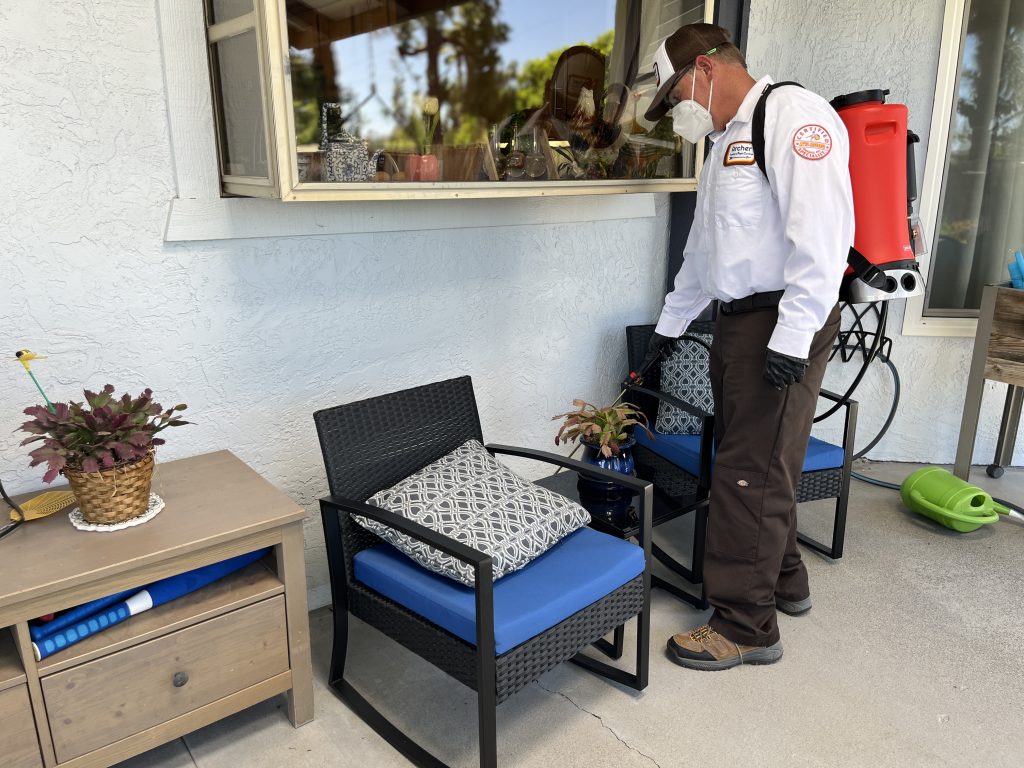
Store-bought pest sprays can seem like a convenient response when ants, cockroaches, spiders, or other pests suddenly appear indoors. A visible insect is sprayed, activity decreases, and the problem may look resolved. Unfortunately, what happens on the surface rarely reveals the full extent of an infestation.
Effective pest control depends on accurate identification, locating harborages and entry points, understanding pest behavior, and selecting treatments that fit the specific situation. Without those steps, do-it-yourself sprays may provide temporary relief while leaving the conditions that caused the problem unchanged.
Surface Sprays Often Miss Hidden Pest Activity
Most household pests spend much of their time out of sight. Cockroaches can remain inside narrow cracks, ants may travel from concealed colonies, rodents occupy wall voids and attics, and bed bugs hide in seams, furniture, and other protected spaces. Spraying only where pests are visible does little to address these hidden locations.
Common limitations of surface-focused treatment include:
- Limited reach into cracks, voids, and nesting areas
- Temporary reduction in pests crossing treated surfaces
- Missed eggs, immature stages, or concealed colonies
- Little effect on structural entry points
- Continued access to food, moisture, and shelter
- Difficulty determining whether activity is actually declining
This is why a brief drop in sightings should not automatically be interpreted as elimination. An infestation may remain active even when visible activity temporarily slows.
Incorrect Product Use Can Create Additional Problems
Pesticide labels provide specific instructions for where, how, and how much of a product may be applied. Applying more than directed does not necessarily improve results. Inappropriate placement can instead increase unnecessary exposure, contaminate surfaces, or interfere with a more effective treatment strategy.
Different pests also require different methods. A product intended for crawling insects may not address a bed bug infestation, termite activity, or a rodent problem. Even when the pest is correctly identified, treatment must reach the places where that species feeds, nests, travels, or rests.
Bed bugs illustrate this limitation especially well. Their ability to hide in protected locations makes incomplete treatment particularly frustrating. Professional bed bug heat applications rely on controlled temperatures, careful preparation, and monitoring rather than random treatment of visible areas.
Sprays Do Not Correct The Conditions Attracting Pests
A lasting pest problem usually involves more than the pests themselves. Buildings can provide food, water, shelter, warmth, and access points that allow activity to continue after a spray has dried or worn away.
Important contributing conditions can include:
- Gaps around doors, windows, pipes, and utility lines
- Moisture from leaks, drains, or poorly ventilated areas
- Food residue and accessible pantry products
- Clutter that creates protected hiding places
- Vegetation or debris positioned close to the structure
- Structural damage that creates additional entry routes
If these conditions remain, new pest activity can appear even after some insects have been killed. Effective control therefore involves both treatment and prevention. Identifying the source of activity helps determine whether exclusion, sanitation, moisture correction, monitoring, or another targeted measure should be part of the plan.
Pest Identification Determines What Treatment Should Follow
One of the biggest limitations of do-it-yourself pest control is the risk of treating the wrong problem. Similar-looking insects may behave very differently, and signs such as droppings, damaged wood, shed skins, staining, or unusual noises can point to several possible causes.
Correct identification matters because treatment decisions depend on the pest’s biology and location. Termites require a very different response from ants. Rodents require inspection and exclusion rather than insect spray. Bed bugs demand attention to concealed harborages, while cockroach treatment must account for moisture, food sources, movement routes, and reproduction.
Professional inspections reduce guesswork by connecting visible evidence with likely nesting areas, entry points, and conditions supporting the infestation. This makes treatment more precise and helps avoid repeated applications that never address the actual source.
Long-Term Control Requires More Than A One-Time Application
Reliable pest management is a process rather than a single spray. The strongest approach combines inspection, targeted treatment, prevention, monitoring, and follow-up so changes in pest activity can be evaluated over time.
A long-term strategy typically includes:
- Detailed inspection before selecting treatment methods
- Targeted applications based on pest behavior and location
- Exclusion of openings that allow pests indoors
- Recommendations for reducing food, water, and shelter
- Monitoring of high-risk areas after treatment
- Follow-up when continued activity indicates another source
These steps are central to long-term pest control because they address both current activity and the conditions that make recurrence possible. Professional oversight also helps ensure treatments are selected and applied according to the property, pest pressure, and specific areas involved.
DIY sprays may appear less complicated, but repeated short-term treatment can prolong an infestation when its source remains hidden. A more thorough approach provides clearer information about what is happening and what must change to achieve lasting control.
Put The Spray Can Down For Good
When recurring pest activity needs a more complete solution, contact Archer Termite & Pest Control for professional inspection, targeted treatment, and a practical plan built around long-term protection.