
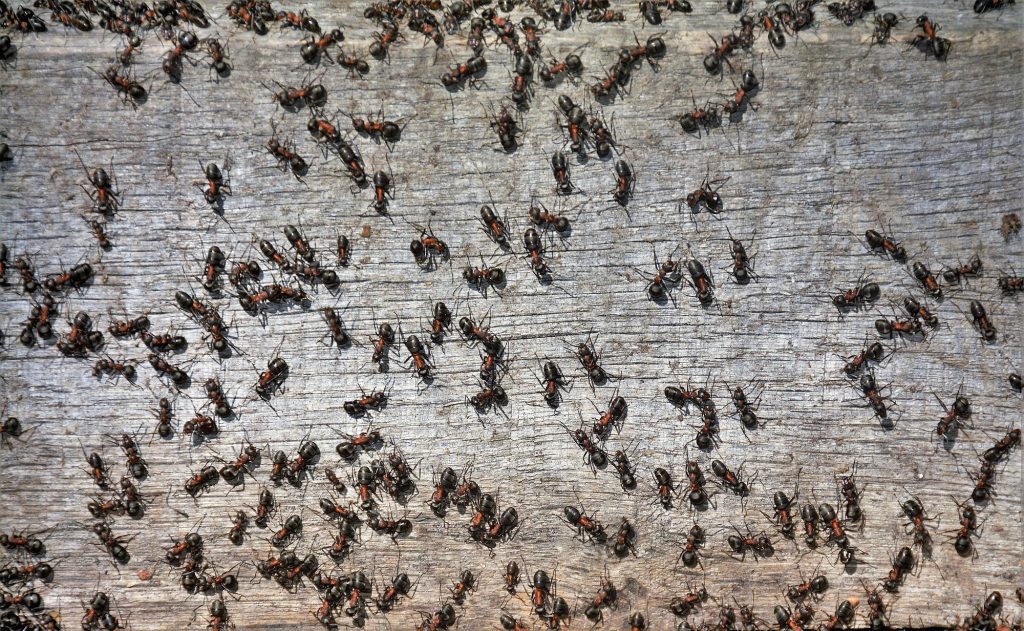
Ants are not wandering aimlessly when they appear in long lines across kitchen counters. What looks like random movement is actually a highly organized system driven by chemical communication and survival efficiency. Understanding how ant trails work explains why kitchens are such frequent targets and why eliminating visible ants alone rarely solves the problem.
From an expert perspective, ant activity indoors is almost always a symptom of a larger colony operating nearby. Effective ant control depends on disrupting the systems that guide ants inside rather than focusing only on the insects that are easy to see.
How ant trails really work
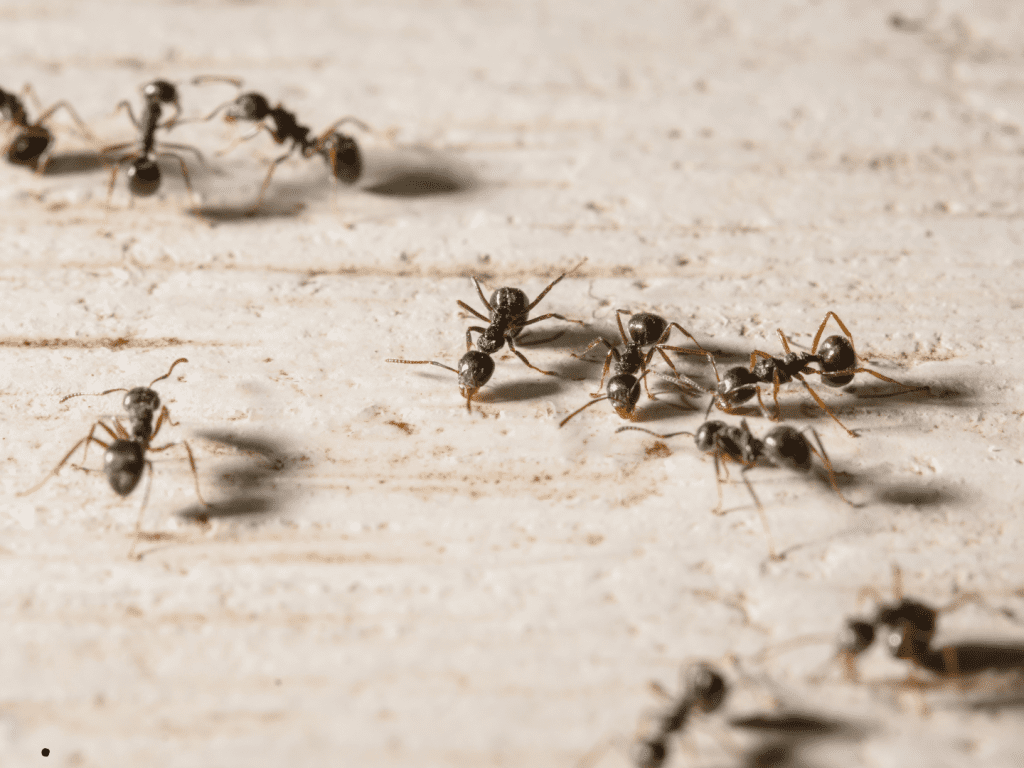
Ant trails are created through pheromones, which are chemical signals ants use to communicate with one another. When a scout ant finds a food source, it leaves a pheromone trail on the surface as it returns to the colony. Other ants follow this chemical path, reinforcing it as more ants travel back and forth.
This process allows ants to move efficiently and exploit food sources quickly. The stronger the trail becomes, the more ants are recruited to the same path.
Key elements of ant trail behavior include:
- Scout ants searching randomly for food
- Pheromone trails forming once food is located
- Reinforcement of trails as more ants follow
- Continuous traffic until the food source is depleted
Because these trails are chemical rather than visual, ants can continue following them even after surfaces appear clean. This is why wiping away ants without addressing the trail source often leads to rapid reappearance.
Why kitchens attract ant activity
Kitchens provide nearly everything ants need to survive. Even well-maintained homes can offer attractive conditions without obvious spills or exposed food.
Ants are commonly drawn to kitchens because of:
- Small food residues on counters and floors
- Moisture from sinks, dishwashers, and appliances
- Warmth from cooking and refrigeration equipment
- Easy access through cracks, gaps, and utility lines
Once ants establish a reliable path into a kitchen, they may continue using it daily. Over time, the colony adjusts its foraging routes to maximize efficiency. This is why ant trails often appear in the same locations repeatedly until the underlying conditions are addressed.
Why surface treatments often fail
Many homeowners attempt to address ant trails using readily available products. While these solutions may reduce visible ants temporarily, they often fail to eliminate the colony or disrupt the pheromone system driving the infestation.
Common issues with surface-level approaches include:
- Killing worker ants without affecting the colony
- Leaving pheromone trails intact
- Causing colonies to split or relocate
- Delaying proper intervention while activity increases
In some cases, improper use of store-bought products can make infestations harder to control. This issue is explained further in this resource about store-bought pest risks, which highlights why partial treatments often extend infestation timelines rather than shortening them.
How professional ant control disrupts colonies
Effective ant control focuses on the colony rather than the visible ants. Professionals evaluate ant species, nesting behavior, and foraging patterns to determine the most efficient way to disrupt activity at its source.
A structured professional approach typically includes:
- Identifying the ant species involved
- Locating nesting areas and entry points
- Disrupting pheromone trails strategically
- Applying targeted treatments that reach the colony
Different ant species respond differently to control methods. Without proper identification, treatments may miss the behaviors that allow colonies to survive. By focusing on how ants communicate and organize, professional strategies interrupt the cycle that brings ants into kitchens in the first place.
Health considerations also play a role in long-term control decisions. Persistent pest activity can affect indoor hygiene and living conditions. Broader concerns related to ongoing infestations are discussed in this resource on pest health risks, which explains why unresolved pest issues should not be ignored.
Preventing repeat ant trails over time
Stopping current ant trails is only part of the solution. Preventing repeat activity requires ongoing monitoring and environmental adjustments that reduce the conditions ants rely on.
Long-term prevention focuses on:
- Monitoring areas where trails previously formed
- Reducing moisture and food access points
- Sealing entry routes around foundations and utilities
- Adjusting treatment strategies as conditions change
Ant behavior shifts with weather, food availability, and colony growth. Consistent oversight helps ensure that new trails do not form as conditions evolve. This approach minimizes surprises and reduces the likelihood of recurring infestations that disrupt daily routines.
Understanding ant trail science clarifies why ants appear suddenly and persistently in kitchens. These insects are responding to chemical signals and environmental cues, not chance. Addressing only the visible portion of the problem leaves the colony intact and allows trails to reform.
When science leads to solutions
If ant trails keep returning despite repeated efforts, it may be time for a more informed approach. Contact Archer Termite & Pest Control to learn how professional ant control strategies can disrupt colonies, eliminate active trails, and help prevent future kitchen invasions.