
Eco-friendly pest control is often misunderstood as a weaker alternative to conventional treatment. In reality, the strongest environmentally conscious programs rely on accurate identification, targeted applications, exclusion, prevention, and follow-up rather than broad treatment without a clear reason. For San Diego County homes, that approach can address ants, cockroaches, spiders, rodents, termites, fleas, bed bugs, and other common pests while keeping the response focused on the areas that actually need attention.
Our team looks at the entire property before deciding what belongs in the plan. Food, moisture, shelter, structural gaps, landscaping, and seasonal activity can all influence pest pressure. Professional service makes it possible to combine lower-impact methods with precise treatment, giving homeowners an effective option that also reduces unnecessary product use.
Start With Inspection And Targeted Treatment
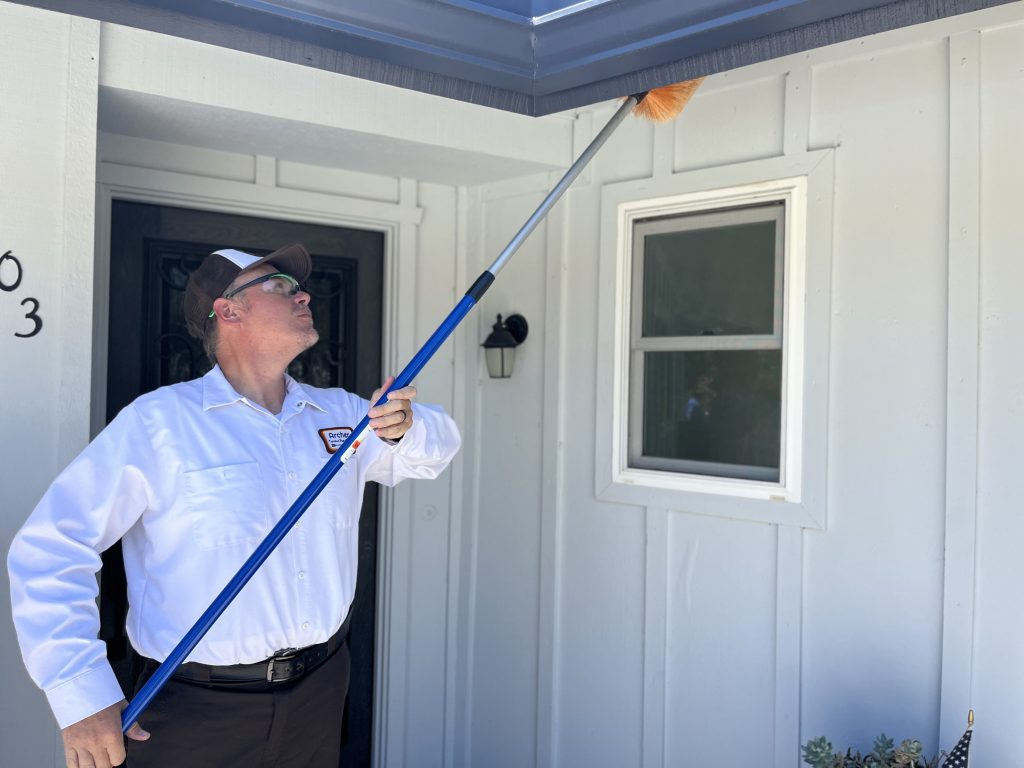
Eco-friendly pest control begins with understanding the source. A treatment applied everywhere may use more product than necessary while still missing nests, harborages, entry points, or hidden travel routes. Our technicians first identify the pest, inspect active zones, and look for the conditions supporting the infestation.
Our guide to fall pest patterns explains how changing temperatures, irrigation, dry conditions, and seasonal moisture can shift activity around kitchens, garages, rooflines, landscaping, and structural wood. That seasonal context helps keep treatment focused.
An inspection may include:
- Checking kitchens, bathrooms, garages, and attics for pest evidence
- Reviewing doors, vents, utility lines, and roof edges for entry points
- Looking for food, moisture, or shelter that supports recurring activity
- Inspecting landscaping and exterior walls for outdoor pest pressure
- Identifying nesting, travel, or harborage areas before treatment
- Documenting activity so follow-up can measure real change
Targeted treatment reduces unnecessary application because products are used where evidence shows they are needed.
Prevention And Exclusion Reduce The Need For Repeated Applications
One of the most effective eco-friendly strategies is making the property less attractive to pests in the first place. Rodents may use roofline gaps or garage openings. Ants and cockroaches may follow food and moisture. Spiders often remain where insect prey is available. Termites can exploit structural wood, soil access, and moisture conditions.
Our team may combine treatment with structural and environmental recommendations so the same problem is less likely to recur.
A prevention-focused plan can include:
- Sealing confirmed entry points after active pest routes are identified
- Correcting accessible moisture issues around plumbing or irrigation
- Reducing clutter that creates low-disturbance shelter
- Managing food or waste conditions that support insects and rodents
- Adjusting exterior conditions that concentrate pest activity near the home
- Monitoring previously active areas for fresh signs
These steps support long-term results because they address why pests are present, not only what is visible during the service visit. They can also reduce repeated pest pressure around the same doors, utility openings, storage areas, and landscape edges. That makes future service more focused and gives our team clearer evidence about whether the source has truly been corrected across the property over time.
Family-Aware Treatment Depends On Precision And Follow-Up
Eco-friendly service is also about how treatment is selected and applied around living spaces. Homes with children or pets require careful attention to product choice, placement, preparation, and re-entry instructions. Our article on safer pest treatment explains why inspection and precise application help reduce unnecessary treatment around food-preparation surfaces, play areas, pet spaces, bedrooms, and outdoor gathering areas.
A professional plan may include:
- Selecting treatment methods that match the pest and activity level
- Applying products only to confirmed treatment zones
- Using baits, traps, exclusion, or localized applications when appropriate
- Providing clear preparation and re-entry instructions
- Checking treated areas during follow-up visits
- Adjusting service if activity shifts or conditions change
This precision matters because pests do not all respond to the same method. Bed bugs may require heat and careful follow-up, rodents may need trapping and exclusion, termites may require species-specific treatment, and ants or cockroaches may be better addressed through targeted placement rather than broad surface applications.
Integrated Pest Management also strengthens eco-friendly pest control by combining inspection, prevention, targeted removal, and long-term protection. The goal is to solve the infestation while reducing unnecessary chemical use and keeping the property less favorable to future activity.
Follow-up is an important part of that process. A quiet week after treatment does not always confirm that the source has been eliminated. Our technicians compare new evidence with what was documented earlier and determine whether pest pressure is declining, shifting, or being renewed by another condition.
Eco-friendly methods deliver results when they are selected for the actual pest, applied accurately, and supported by prevention. The effectiveness comes from professional judgment, not from treating less for the sake of treating less. A well-designed plan can be both environmentally conscious and highly effective because every step is tied to evidence.
Choose Smarter Pest Protection Without Sacrificing Results
If you want effective treatment with an eco-conscious, inspection-led approach, contact Archer Termite & Pest Control for professional eco-friendly pest control focused on targeted treatment, prevention, monitoring, and long-term protection.