
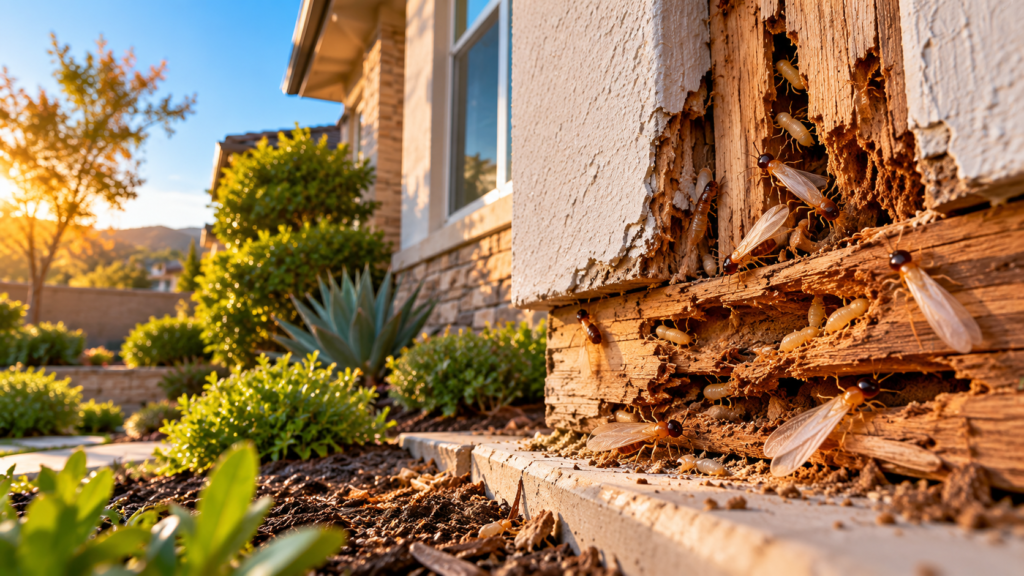
Fall can be an active termite season in San Diego County, especially for western drywood termites that may swarm during late summer and fall. Mild temperatures, irrigated landscaping, coastal humidity, and seasonal rain can also keep subterranean termite conditions favorable around foundations and soil. Because both types can remain hidden, homeowners may notice wings, pellets, mud tubes, or weakened wood only after activity has already developed.
Our team approaches termite control by identifying the species, locating active areas, and evaluating the structure before choosing a treatment. That matters because drywood termites live directly inside wood, while subterranean termites maintain colonies in soil and reach structures through protected pathways. Professional inspection helps match the response to the actual infestation instead of relying on surface symptoms.
Fall Swarms Can Reveal Hidden Drywood Termite Activity
Western drywood termites are common in Southern California, and fall swarming can be one of the first visible clues that a colony is present. Swarmers may appear near windows, doors, eaves, attics, or other wood-rich areas, while discarded wings can remain after the insects have moved.
Our guide to eco-conscious treatment explains why accurate identification and targeted treatment are important before products are applied. With termites, knowing whether the activity is localized or widespread determines which treatment method makes sense.
Signs our technicians may look for include:
- Discarded wings near windows, doors, or light sources
- Small fecal pellets beneath infested dry wood
- Hollow-sounding trim, framing, or exposed structural wood
- Damage around eaves, fascia, attic framing, or window areas
- Swarmers emerging from wood or appearing indoors
- Previous repair areas showing fresh termite evidence
These signs can point to drywood activity, but a professional inspection is needed to determine how far the infestation extends.
Subterranean Termites Can Stay Active Below The Surface
Subterranean termites behave differently because their colonies are connected to soil. Fall rain, irrigation, shaded landscaping, and moisture near foundations can keep soil conditions favorable even when daytime heat begins to ease. In some parts of California, warm weather after fall rain can also coincide with subterranean swarming.
Our technicians inspect foundation edges, slab transitions, crawl spaces, plumbing areas, and other locations where soil moisture and structural access may overlap.
Important conditions can include:
- Mud tubes along foundations, walls, or structural supports
- Damp soil beside slabs or crawl-space areas
- Irrigation repeatedly wetting the foundation perimeter
- Wood-to-soil contact around posts, siding, or stored materials
- Plumbing leaks or drainage problems near structural wood
- Foundation cracks or utility penetrations that provide concealed access
Moisture correction can reduce favorable conditions, but it does not eliminate an established colony. Active subterranean termites still require treatment selected for their location and extent.
Expert Treatment Depends On Species, Damage, And Infestation Size
The effect of termite damage goes beyond the insects themselves. Long-term feeding can weaken framing, trim, subflooring, roof components, and other wood, which can affect repair costs, inspection findings, and property value.
A professional termite-control plan may include:
- Localized spot treatments for confirmed drywood or subterranean activity
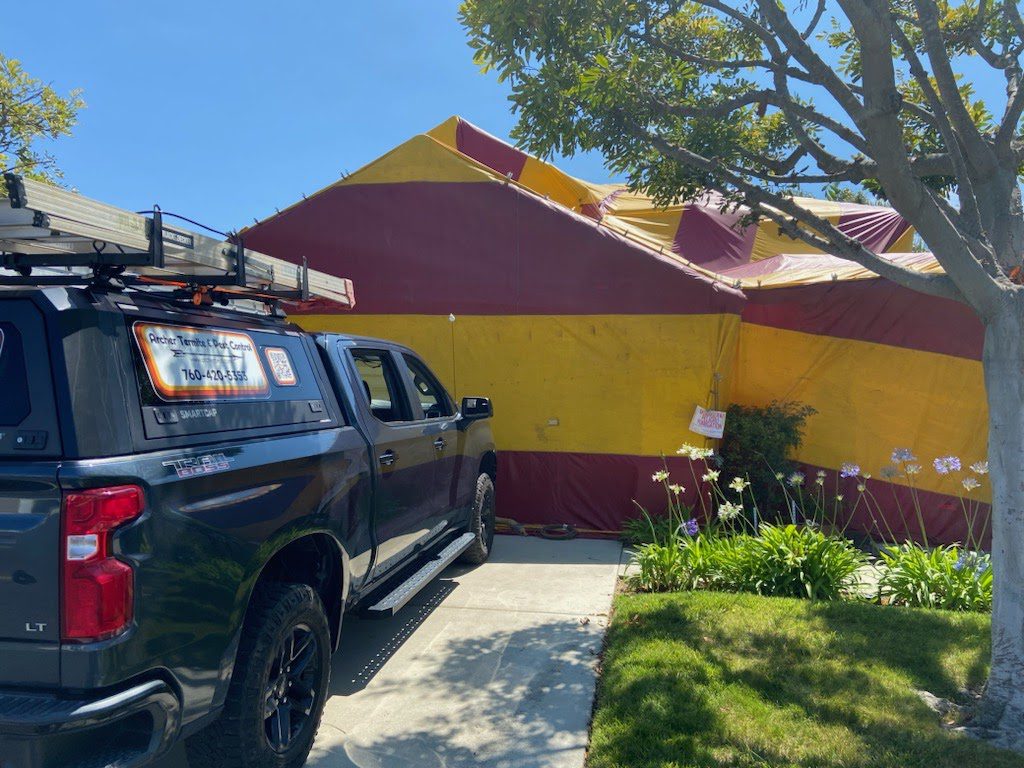
- Whole-house fumigation when drywood infestation is widespread
- Full-structure subterranean treatment for significant soil-connected activity
- Borate foam or wood treatments where conditions support their use
- Heat treatment for selected drywood termite infestations
- Repair of termite-damaged or weakened structural wood
The right method depends on what the inspection finds. One localized colony may not require the same approach as widespread drywood activity across several structural areas.
Experts also look beyond immediate elimination. Damage should be distinguished from old inactive evidence, moisture deterioration, and other wood problems before repair begins. Removing or covering damaged material too early